

Service · Web apps & SaaS
Your web app, clickable in weeks.
SaaS products, dashboards, marketplaces and the integrations between your tools: new builds, rescues of apps that got stuck and development after launch. Senior engineers make the architecture calls, and after launch we stay on as your CTO.
- A working version in weeks
- React and Next.js
- Stripe and PayU payments
- Integrations with your tools
- Rescues of AI-built apps
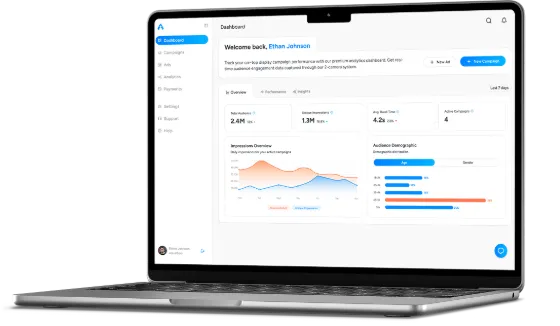
Mission 02 · OOHAi's advertiser dashboard · Read the story
01 · Sound familiar
Sound familiar?
Most web projects reach us from one of three places: an idea nobody can click yet, an app built with AI tools that got stuck, or a live product that needs to grow.
-
“Every agency sends us a long spec and a quote. Nobody shows us the product.”
Our answer: You click through a working prototype early: not a slide deck, not a Figma file, software you can click. We turn the version you accept into production code.
-
“Our SaaS needs accounts, plans and payments before anyone can pay for it.”
Our answer: That part is standard, and we have built it before: Planline runs a free and a paid plan, and Gatework sold subscription plans through Stripe.
-
“We built it with AI tools. It almost works, but the last 20% keeps fighting back.”
Our answer: We find and fix what is broken and check what AI tools skip: security, data and costs. If the foundations are shaky, we rebuild them and keep your idea.
-
“Requests come in by phone, e-mail and chat, and nobody knows where anything stands.”
Our answer: We put the process into one app. In Kru every job is a ticket with a status, assigned workers, comments and attachments, so everyone can follow it from report to completion.
-
“Our tools don’t talk to each other, so someone copies data by hand.”
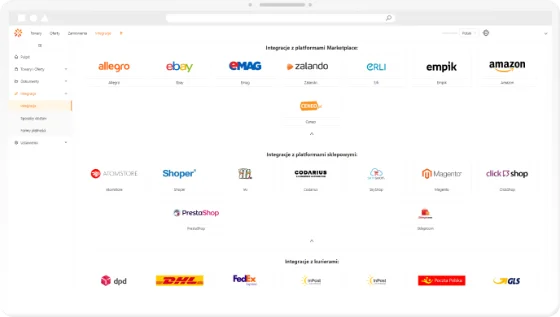
Our answer: We connect them through their APIs: our services sync xSale's orders and stock with the Empik, Erli and Decathlon marketplaces, and Planline's tasks stay in step with Google Calendar in real time.
02 · Scope
What we build
Every product is different, but the same building blocks come up again and again. These are the ones we have built for clients and partners.
-
A first version real users can use
Small, but live and working: the core of your product, ready for its first users.
-
Plans, accounts and payments
The parts every SaaS needs: Planline runs a free and a paid plan, Ecom Revolution took one-off and subscription payments through PayU, and Gatework sold subscription plans through Stripe.
-
Dashboards and admin panels
Each role sees what it needs. OOHAi has separate dashboards for advertisers, administrators and screen owners, with analytics in real time, and elleFA's team manages users and data in an admin panel with filters, import and export.
-
Marketplaces with two sides
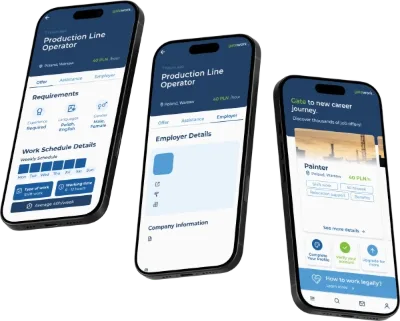
Requests on one side, offers on the other, and a way to talk: Kru connects property owners and residents with contractors, and Gatework connected employers in Poland with people looking for work, in a chat that translated messages.
-
Integrations with the tools you use
Your app talks to the systems you already have: our services keep xSale's orders and stock in step with the Empik, Erli and Decathlon marketplaces, Planline stays in step with Google Calendar, and Kru connects to Buildium.
-
AI inside the product
Features your users notice: OOHAi's ad creator generates the advertiser's creative, Ecom Revolution's AI wrote product descriptions and suggested domain names, and with Kru x AI jobs are reported, accepted and quoted by e-mail, SMS or phone.
-
A rescue or a rebuild
An app built with AI tools that got stuck, or an old system that holds you back: we fix what is broken, or rebuild it and keep what works. Several thousand Ecom Revolution users moved from the old system without a break in service, and the xSale panel moved from outdated technology to React and TypeScript.
-
Development after launch
A web app is never finished. Gatework got premium offers, a new home screen, payment checks and analytics in its first year after launch, and Kru's development continues, including its web panel for owners and administrators.
03 · In the field
Screens from real missions
Three different kinds of web work: a SaaS product we build with a partner, the integrations behind an e-commerce system, and a dashboard over energy data.


04 · Process
From the first call to a product people use
No months of specs before you see anything: you click through working software early, and you decide what goes into the full build.
-
Talk
A short call or your mission brief. We ask about users, deadlines and money, not about tech stacks.
You getA straight answer, with how we would do it and a rough timeline, in writing. If we are not the right crew, we say so.
-
Write it down
Goals, scope and decisions go into one versioned brief. If the scope is still open, a discovery workshop settles it first.
You getOne source of truth, not ten scattered docs.
-
Build
Our coding agents build from the brief. Senior engineers make the architecture calls and review every change.
You getCode in which every change was reviewed by a senior engineer.
-
Click through it
You test a working prototype early, in your browser. Not a slide deck, not a Figma file: software you can click.
You getSomething to show five users, a client or an investor before the full build.
-
Harden and ship
We turn the accepted prototype into production code and ship it. We can also host it, or deploy it to your cloud.
You getThe product live, for real users.
-
Stay on
One mission with a clear finish line, or mission control on call: a monthly tech partner who owns the technical calls.
You getA CTO without a full-time hire.
05 · Who it’s for
Who it helps most
It works best when the software is how your business makes money or gets its work done.
-
Founders with a product idea
You can pitch it in one breath, but nobody can click it yet. We build a clickable prototype for your first users or an investor, then the first version people can sign up for and pay for.
-
Companies whose process outgrew spreadsheets
E-mail threads, spreadsheets and tools that don't talk to each other. We build the web app your team and your clients work in, with roles, statuses and the integrations you need.
-
Teams with an app that got stuck
Built with AI tools or left half-finished, it almost works. We rescue it, check whether it is safe to launch, or rebuild it on solid foundations.
-
Live products that need to grow
Users are in. Speed and stability are not. We ship new features faster, stabilise and scale what is there, and own the technical calls.
06 · Proof
Why Geeknauts
-
Fast first versions
OOHAi's first version took 8 weeks, with a team of 6. OrbitOrca's partner saw a working first version after about three weeks, and the first production release came seven weeks after the first commit.
-
Platforms with real users
Ecom Revolution had more than 50,000 registered users and 10,000 stores by October 2024. Batalion Powstańczy, the web game we made with Fundacja Macte Animo, was used by more than 300 schools and 4,000 students, according to the foundation.
-
Years with one client
For Futuriti, a small order-tracking page in 2021 led to the rebuilt xSale panel and years of marketplace integrations, and Futuriti sent other xSale users to us.
-
In the client's words
5.0 from 13 reviews on Clutch. "Geeknauts demonstrates great conscientiousness and honesty." (CEO, EcomRevolution)
07 · Questions
Questions, answered
Our app was built with AI tools and got stuck. Can you take it over?
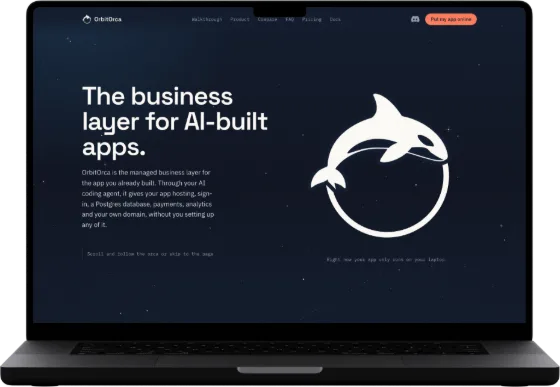
Yes. It is one of the three places people come to us from. We find and fix what is broken, check whether it is safe to launch (security, data, costs: the things AI tools skip), or rebuild it on solid foundations. With a partner, we also built OrbitOrca, a platform that checks AI-built apps for what would break in production.
Which technologies do you use?
Every web project on our case pages runs on React or Next.js, most often with Node.js, NestJS or Strapi behind it.
How long does it take?
You click through a working version within weeks. The full platform takes longer: elleFA's app and backend launched in 2.5 months, Gatework in eight months.
What does it cost?
It depends on the scope. In the mission brief you pick a budget band (up to €5k, €5k–€20k or €20k+), and within 8 working hours you get how we would do it and a rough timeline, in writing.
Can you work with our own developers?
Yes. If you code yourself, you get senior backup, not hand-holding. For Futuriti our part was the front end of the xSale panel, with Futuriti setting the priorities.
Do you design it too?
Yes. We designed and built Gatework and OrbitOrca, and Ecom Revolution's platform came with its UX/UI design. More on our UI/UX design page.
Can one system serve many clients, each with their own settings?
Yes. Buzly runs as one system for many schools: each university and college gets its own settings, and Sacramento State got its own colours, logo and sign-in screens.
Can you host it?
Yes, on our own high-availability infrastructure, looked after by our administrators (see hosting), or on your cloud: we moved Kru's system to AWS.
Missions that prove it
Browse the portfolio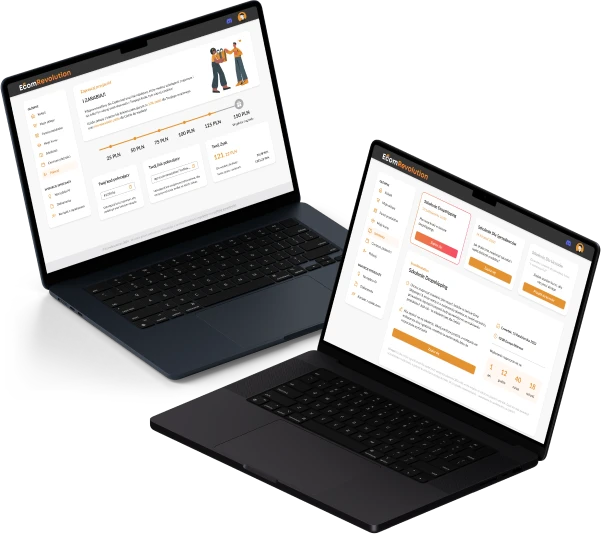
Next mission: yours.
Bring an idea, a half-built app or a live product. Start with the mission brief: it takes two minutes, and our team replies within 8 working hours.